To Web or Not To Web?

It’s a topic I’ve been going round and round with for the better part of a year. In my dreams, I would love for Ares to be a truly next-gen platform. Something built for the next twenty years, like Penn and Tiny have been for the last twenty. But that means a web-based game, something like the prototype I put together a few months ago.

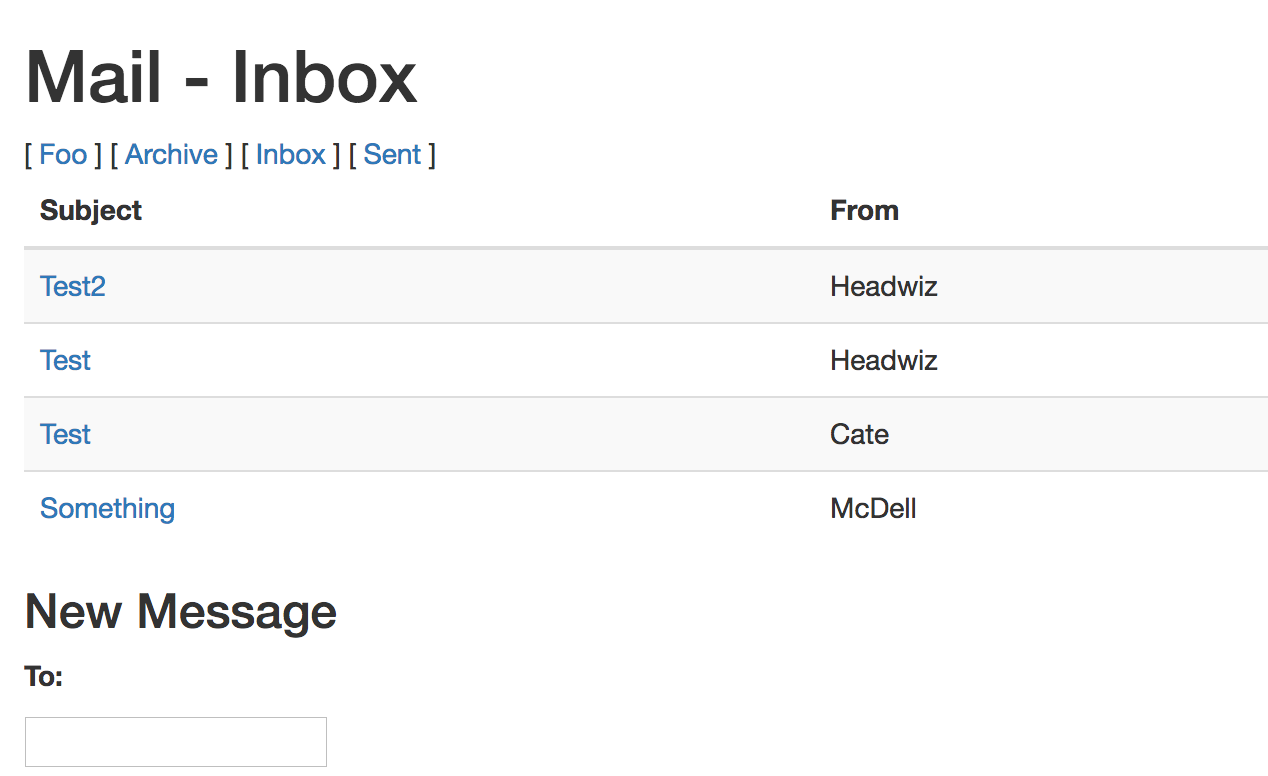
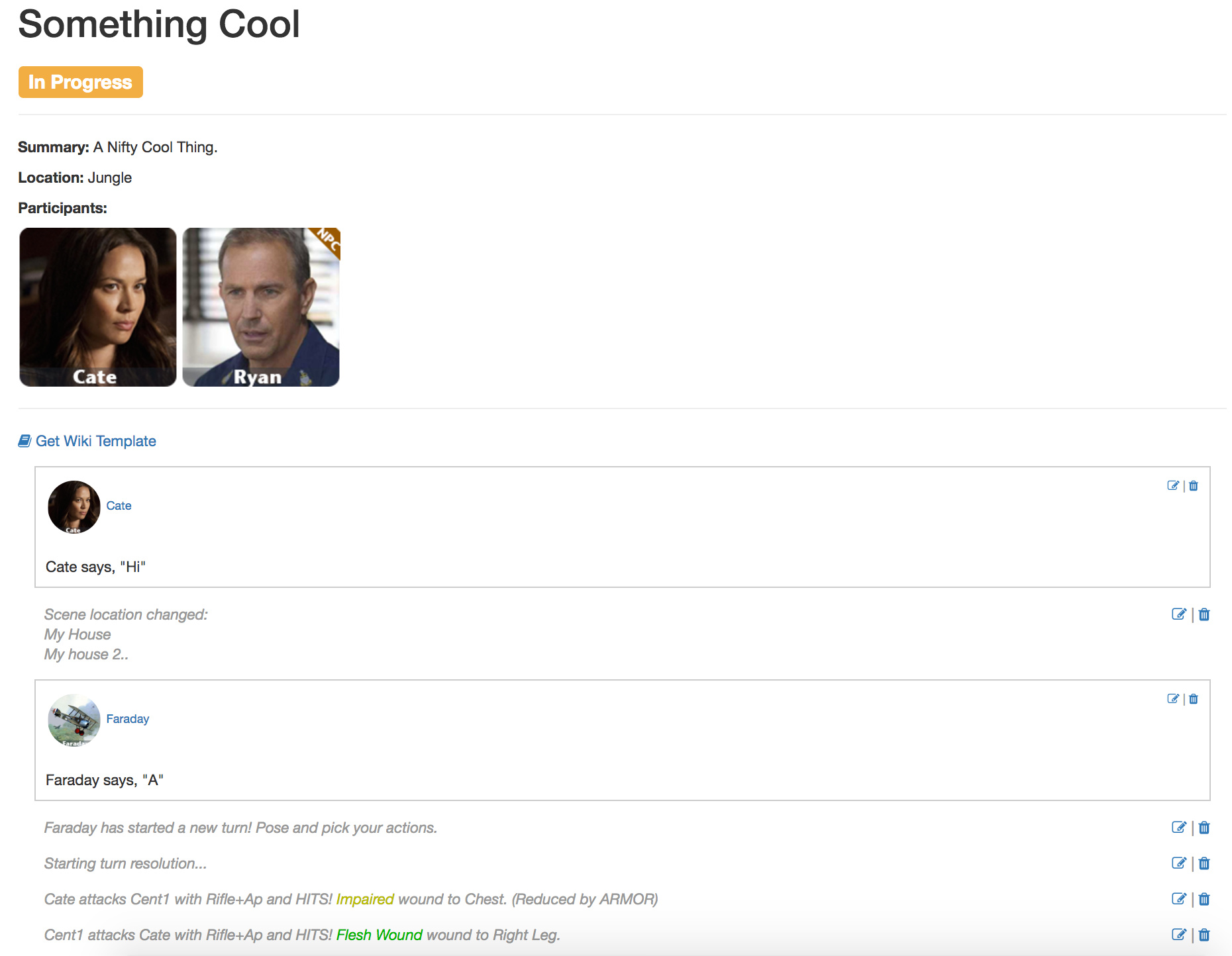
Everyone keeps telling me they’re not interested in playing via the web, so I nix the idea. But then I see things like @Sparks’s web-based BBS system for Evennia and find myself wanting to do something like that for Ares. And why stop there? Mail, jobs, player census, creating combats … they could all have web front-ends too.

But here’s the thing… I wanted to make Ares easier to code for, but all that web stuff adds more than a little complexity. This isn’t a big deal if you’re using the out-of-the-box functionality, but if you want to modify it? Now you/your coder has to learn all kinds of web stuff and a more complicated codebase.

So which is more important? Future-looking features that make the out-of-the-box setup really cool, or making it easier to build your own customized game.

I keep ping-ponging back and forth like a tennis match, so I’d like to hear what others think. Especially if you’re planning to build your own game with Ares. What’s more important to you?

I still firmly believe in splitting the difference. I find web-based RP, like Google Docs or forum RP, or Storium, to often be paced wildly differently; if a scene takes two weeks to play out, it can get frustrating. But I also think plain text-based everything-on-the-game isn’t a great future prospect.

I think switching solely to the web will cost players, in short: a lot of MU*ers find the pace of Google Docs/forum RP to be infuriatingly slow, and switching solely to the web, that’s the crowd you’re going after. But I think supporting richer web-based experiences will draw in new players while keeping the old.

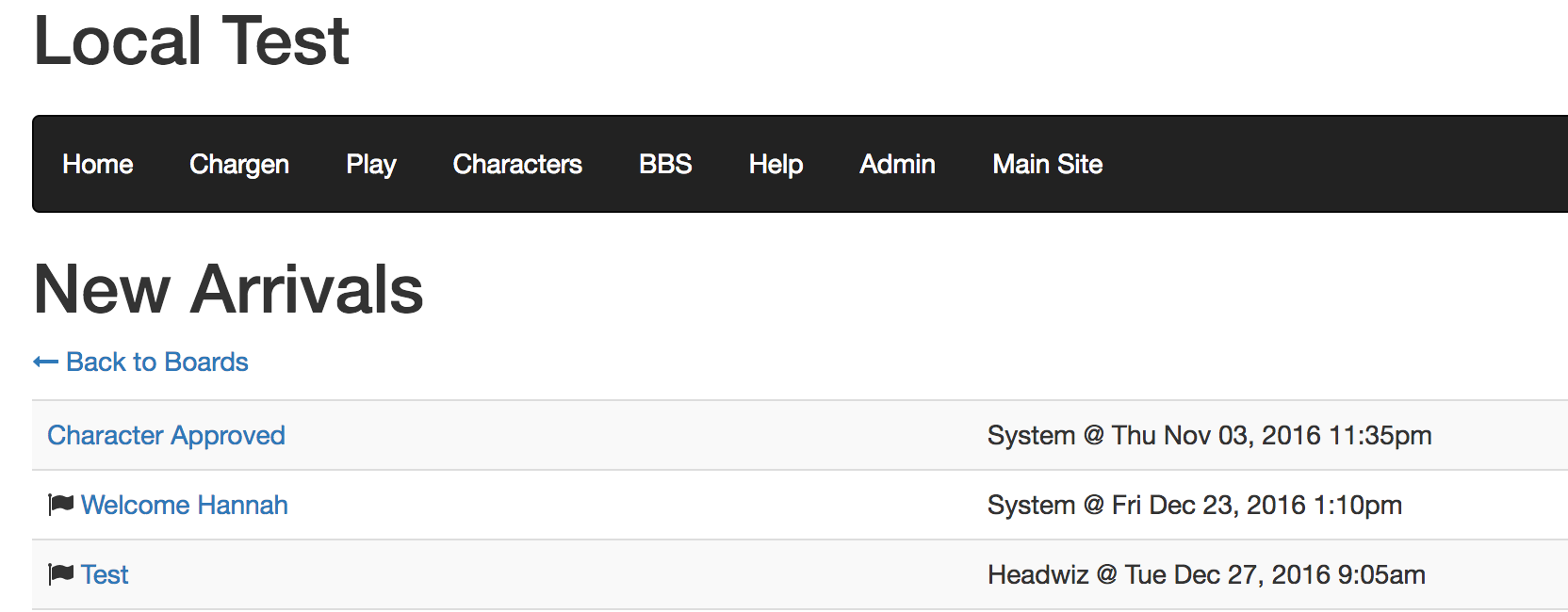
This is why I’ve been working on creating abstraction layers for Evennia, where I can write a system that exists on both the game and on the web, and can express data in a useful manner to both. Witness Paxboards, for instance, where on the game it acts like you’d expect of a Myrddin-style bboard (albeit with some newer features), while on the web, it works more like a web-forum. People who are used to one can use the one, people who are used to the other can use the other. (And it has the advantage that bboards can be read while at work, even if you can’t log in easily.)

It’s a larger amount of work, but I also think it’s going to be worth it in the long run as I build out the toolbox of systems this way.

So, in short, count me in as someone who thinks future-looking features are the better bet. Especially since I suspect 90% of Ares games will just use the out-of-box setup.

1 Like

I think having web tie-ins is alright, but moving to purely web-based is something that makes me uncomfortable.

For one, browsers already eat a lot of memory. Start adding in these web apps and it gets worse. For two, I can do things like alt-tab over to my MU* client. Start throwing in tab after tab after tab of MU*s in a browser and… well, shit, I can’t do that anymore, can I?

Can I have spawn windows? Will that be another tab? And will I have a tab for RP and a tab for spawns and a tab for combat and a tab for BBS and and and and and… I think it just starts to spin off into being risk of asking way too much. I mean, I get the omg cool feeling of it, but I also feel like you’re basically saying: alright, if you wanna MU* in the future, you must be sitting at a computer, with a keyboard, with a browser that can support a memory hog. On a tablet or a phone? Sorry, you’re kinda SOL if you wanna be in combat tonight because you’re gonna need three tabs open to be able to manage this.

I don’t want to need a keyboard and mouse just to MU*, guys. Part of why I love it is because it’s so low key, because it doesn’t require a fully graphical interface and a lot of overhead. I get wanting to make it super flashy and all, but during the middle of the day? I already have three instances of Chrome open with an average of twenty tabs across them. I’m cringing at the idea of adding more tabs just to be able to MU* still.

1 Like

Those are all good points, which is what makes this such a tough call! Some additional questions/thoughts…

@Sparks - Curious why you feel that the pace of a web-based game would be slower. I’ve heard others raise that question but I don’t really understand. For me, the tool doesn’t determine the pace; the expectations of the players do. For example… I can use a chat program like Discord or Slack to have a ‘live’ conversation with someone or I can use it to have an extended convo with somebody in India with one reply each way per day. A web-based tool could support both. Existing MU*s only support ‘live’ RP, which is why people already resort to using G-Docs when they can’t get together.

@Auspice - Curious why you think you need a computer and keyboard/mouse to play a web-only game? With more things touchable/clickable, wouldn’t there be less typing? Less need to look up help files? I think one of the benefits of a web app is that you wouldn’t spawns quite as much (if at all) because things can be more segmented in the GUI itself. Like switching channels in Slack or Discord. I’ve used Slack on my phone. Can you use this forum on yours? A MU wouldn’t be any more intensive than this.

My biggest thing… I look at my kids and I see potential future MUSHers. My daughter is only 9. She likes to write stories and has expressed keen interest in my “storytelling game”. I have a really hard time imagining kids from the “everything is a touchscreen” generation getting into a command-line game.

@Faraday — my pace concern is not about the tools, and more about cultural clash. I also do MMORPG RP, which is often conducted outside of the game via forum or Google Docs; within that community, the pace of a scene is often measured in weeks, if not longer. Which is fine, that’s a totally okay thing, but I do suspect that moving entirely to a web-based format would draw that playerbase, the folks who look first for wholly web-based games, and that their expectations of pace and those of the MU* community would be at-odds. And I will admit, selfishly, I like having all my games in one client (separate from everything else I’m doing), and all my logs in one place (because Atlantis autologging is my friend).

I’ve tried before to get MMORPG RP friends to join MU*s, and their response generally is “This is awfully fast-paced. I can’t do it alongside anything else—I can’t go play a game while I’m RP’ing, not easily—and you guys try to finish a scene all at once. It’s so high-pressure!” They never stick, even when they find a theme or premise very interesting.

So that’s my concern about clash of culture; if you build a predominantly web-based RP tool, you will attract predominantly web-based RPers. And if that becomes the pace of things—like Storium games tend to run at—I do think it means you may need to bid farewell to a chunk of the existing MU* culture. (Which may not be a wholly bad thing in terms of bringing fresh blood to things, I grant.)

Now, I’m going to contradict myself—to channel the part of me that does do Secret World and Star Citizen RP off in Google Docs and on forums—and admit I also like the idea of web-based ‘scenes’ you can start and end and RP in from the web in little bursts, because there are times when I’m, for instance, on vacation and I won’t have time to sit down for a 2 hour stretch to scene, but I might still want to RP and can throw a pose into a web-based scene now and then. Having that still tied to the game (for any use of stats or other things) could be very nice compared to Google Docs.

But beyond that? My greater want is to not be cut off from the game when I can’t have Atlantis running.

I want to be able to glance at the bboards on my phone when I’m at work, so when someone on my social circle’s Slack server goes, “Oh dang! That bbpost just threw serious shade!” on #arx, I can bounce to the game’s website and read the post rather than having to ask someone to copy and paste it, or try to log in and deal with people paging me and channel spam and everything else when I wanna read just one post. (Witness my Paxboards system, called out above.) If someone on the Slack’s #bsgu channel goes, “Wow, this Marines scene is intense”, I like the idea of being able to pop over and skim the scene as it’s going, if it’s public. (I love Arx’s live event-logging system, for this reason.)

That’s my $0.02 (including sales tax where applicable), at any rate.
1 Like

Fair point. Also, conversely, it might turn of MUSHers just on principle, even if they could still play a ‘live’ scene with other interested parties.

One issue I always had with the idea of slower paced scenes (like G-Docs) was continuity. You’re off wrapping up this scene from two weeks ago still but meanwhile the game has moved on without you.

So for public scenes, Evennia (or is that specifically an Arx thing?) updates a log log on the website live as you go? That’s interesting.

Do people actually use Slack for in-game chat? I looked at Discord briefly but there was no way to easily tie it to the game logins. You’d have to have separate accounts. Not the end of the world but just another hurdle.

1 Like

@Faraday — yeah, the continuity thing bugs me too.

For the public scene thing, it’s an Arx-specific thing—code that Tehom wrote for Arx—where events are automatically logged and put on the website. For public events, anyone can read the log; for private events, only the attendees can (while logged into the website as themselves). As an event is running, the log is updating live; if you are curious about spectating a public scene, or if you’re running late to get to a private scene you were invited to, you can follow along on the website.

As for Slack, I just meant a lot of my social circle uses Slack anyway for work, so we have a personal Slack server to chat about stuff; there’s channels for folks to enthuse about their interests, including Arx and BSGU. (Along with channels for comic books, movie spoilers, newly-found recipes to share, venting about politics, sharing cute kitten pictures when needed on a bad day, etc.) I’ve yet to see someone integrate a Slack server into a game.

1 Like

I had a personal social circle Slack going for a while also (a lot of us went separate ways). And that’s my concern. A lot of these web apps cropping up are not phone friendly or end up caught up in IT rules end up blocked. They’re not as lightweight to hop onto as Atlantis or Mudrammer for that daytime use.

I have a friend who is a cop. He works 3rds. He’ll MU* during work if it’s real slow. But if it was a web-app, he’d pretty much have to drop the hobby entirely; it’d become a bit too intensive to be able to just jump in and skim over some text.

As for the mention of it being ‘fast paced’? I gotta agree. I had a conversation with someone recently who is part of that MMO/LJ RP crowd and the idea of trying to finish a scene in one day was ‘too stressful’ for them. They refused to try MUing for that reason. We’re always gonna have that sort of disconnect, but that’s… I mean, it’s not a terrible thing, really. Just like how you have the MOBA gamers vs the MMO gamers vs the fighter gamers. Everyone’s got their own flavor. But going to your tried-and-true MUers and going ‘Sorry, guys, we’re going to kill what’s worked for you for over two decades to try to cater to these other guys…’ seems sorta lame.

1 Like

That would be lame. That’s certainly not my intent though.

The way I was looking at it, there was nothing to stop people from playing via a “live chat”-oriented web app exactly the same way they do today on a game: log onto the game website, see who’s on, start a scene, finish it that same night. The only difference was the tool you used. Plenty of people use forum and chat software from mobile; a MU* isn’t really any more intensive than that. It seemed to me that having at least the minimal web client in Ares already has actually enabled more people to play from their phones, work, etc. due to lack of port restrictions.

The culture thing… yeah, that may prove to be more of a sticking point than the technology.

1 Like

I guess the big thing is:

If it can be used concurrently with a MU* client (can you use either/or)? Sure.
If you’d have to give up Atlantis/Potato/SimpleMU? I’m probably pretty against it.

Because I don’t want to have to use both. Right now, I’ve got everything contained in Atlantis for the games I play. It’s all right there, in one spot. It’s as much a mental switch over as it is a digital one from window to window.

I just think of how, over the years, at a job when they add a new tool. ‘Alright, for all the existing clients, you have to use existing tool. But for every new client we add, you need to open and use new tool.’ and it was always a total and absolute pain. It was never easy, it was never a smooth transition. It always felt clunky and more than a bit stressful because it was a mental change over each and every time.

For new players, sure, it’d be fine. It’d be the only MU* they’re playing and they’d be learning it fresh. For everyone else, it’d be a total re-wiring plus the hassle. I’d… probably just not play until I’m not playing any other MU*s and I don’t have that worry of switching back and forth.

2 Likes

Sure… very reasonable. And it absolutely can be done, but that brings us right back around to the original point: supporting both web and telnet adds a non-trivial amount of complexity to the codebase, making it harder to learn and customize the code. Is it worth it?

@Faraday — I still think yes. Again, especially for Ares, most folks will use the game out of box.

(But given my bboard, I think it’s clear I lean that way even for situations where people won’t, and will need to modify the code.)

1 Like

Interestingly enough, I say ‘no.’ As someone poking at Ares (with the help of an actual coder, of course), I think that simplicity in codebase is good. People are going to tinker with the code, because gamers are tinkerers, and the most complexity there is in the code, the more likely that they’ll (we’ll) accidentally screw something up while making a “simple” change.

1 Like

@Sparks I am weak.

1 Like

@faraday — Kindred spirits! (I approve, obviously.) :wink:

1 Like

So so very weak.

I was able to do all this without actually adding any complexity to the mail codebase. The web code is ugly as sin because the Ares framework is inherently telnet-oriented not web-oriented, but I think maybe I’m okay with that.

The message would be, basically:

“Here’s a nice plugin-driven framework for the telnet-oriented MU* commands, easy to configure and extend. Here’s an example of the sort of website you can build using this framework. It works out of the box but if you want to do different stuff with it, you’ll have to roll up your sleeves and get messy.”

Maybe that’s not such a bad compromise after all.

See, now you’re ahead of me; I’m still working on the webmail thing for Evennia. :slight_smile:

(And seriously, yes. I think that’s a perfectly fine compromise.)

1 Like

@Sparks - you’ve created (or at the very least enabled) a monster :slight_smile:

Works well with static content that you have to refresh. Two-way communication would entail a lot more complexity. But it’s a start, at least.

Now if only wikidot had a decent open API, my MU-Code life would be complete.

1 Like